Home / Blocking payments at the bank, not the site
Independent guide · 2026-11-16
Blocking payments at the bank, not the site
 Partner offers · Country: United KingdomUpdated 24 November 2026


7Gear · Welcome bonus£3,000 welcome bonus on your deposit
Reviews (8,590)
5.0Rating


A block held by a bank works on the payment rather than the account, which gives it a reach no gambling register can match. It also has gaps, and the gaps are predictable. This page explains what the merchant category mechanism does, which routes slip past it, and how to test a block instead of assuming it works.
What a merchant category block actually does
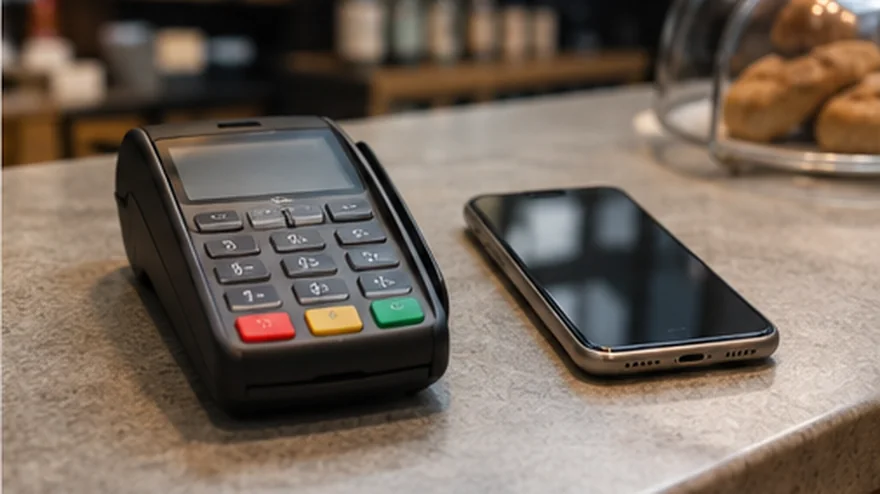
Card transactions carry a code describing the type of business being paid. Gambling has its own codes, and a block instructs the issuer to decline anything arriving with one of them.
The block therefore operates on the classification of the merchant, not on the website's name or its licence. A site the register has no authority over is blocked just the same, provided its payment processing is correctly classified.
Decisions are made by the issuer in real time, which is why the decline is immediate and the gambling site cannot override it.
Because the mechanism is a payment control, it is available from the bank rather than from any gambling operator, and it is independent of any self-exclusion.
Where to ask, and what to ask for
Many British banks and card issuers now offer the block in their app, usually under card controls or spending limits. Where it is not in the app, telephone banking can normally apply it.
Ask four questions: whether it covers every card and account you hold, whether it applies to both debit and credit, whether a cooling period applies before it can be lifted, and whether it also blocks transfers rather than only card payments.
The cooling period is the feature that matters most. A block that can be switched off instantly is a speed bump; one that takes a day or more is a barrier.
Where an issuer offers no block at all, closing the card and using one from a provider that does is a legitimate response.
The gaps, named honestly
The commonest gap is an intermediary. Money sent to a wallet, an exchange or a payment service is classified as that business rather than as gambling, and the onward step never touches the issuer.
A second gap is miscoding. A merchant processing through an unusual acquirer may carry a code that is not on the blocked list, which is a mistake rather than a design feature but still lets a payment through.
A third is cash. Withdrawing notes and funding an account through a third party bypasses the mechanism entirely.
A fourth is somebody else's card. Nothing technical prevents it, and it converts a personal problem into a problem between two people.
Naming the gaps is more useful than pretending they do not exist, because anybody building a barrier needs to know where to add the next layer.
Blocks on transfers and standing instructions
Card blocks do not necessarily cover bank transfers initiated from the account. Where an operator accepts transfers, that route can remain open after a card block is applied.
Ask explicitly whether the bank can restrict outgoing transfers to gambling merchants, and whether it maintains its own list. Policies differ considerably between institutions.
Standing arrangements with third parties, including recurring wallet top-ups, have to be cancelled individually. A block does not reach a payment the customer already authorised elsewhere.
Review the statement for the previous few months and cancel every recurring item connected to gambling. This takes an evening and closes the most reliable gap of all.
Testing a block rather than trusting it
A block is only as good as its coverage, and coverage is testable. The safe test is a small deposit attempt, not a large one.
If the attempt is declined, the block is working on that route. If it succeeds, the money should be withdrawn immediately and the bank told that the classification is slipping through.
Repeat the test on each card and account, because banks apply controls per product rather than per customer more often than people expect.
Anybody who finds themselves hoping the test will succeed has learned something important, and the support page is the right next stop.
How the block sits alongside the register
The register works on accounts at licensed operators; the block works on payments to any merchant classified as gambling. Their coverage overlaps in the middle and differs at the edges.
Used together they are considerably stronger than either alone, because each covers the other's blind spot. This is why support services recommend both rather than choosing between them.
Neither addresses the reason somebody is gambling, which is a separate piece of work and the one that lasts.
Treat the pair as the mechanical floor: the minimum arrangement that makes an impulse cost more than one click.
Lifting a block, and why to leave it
Most blocks can be lifted by the customer after whatever cooling period applies. The existence of that option is what makes the block acceptable to banks rather than a form of guardianship.
Deciding in advance what would justify lifting it is more useful than deciding in the moment. A reason that would not survive being written down is not a reason.
A block left in place costs nothing, has no effect on credit, and does not restrict any other spending. There is rarely a practical argument for removing it.
Where a block has been lifted and regretted, it can be reapplied. The cooling period starts again, and that is the point.
Credit cards, borrowing and the harder question
Funding gambling with borrowed money is the single clearest warning sign in this whole subject, and a card block is only the mechanical part of the answer.
Credit card gambling is restricted for licensed operators in Britain, which pushes anybody determined to borrow towards less visible routes: cash advances, overdrafts, buy-now-pay-later facilities and informal loans.
A block on the card does nothing about any of those. Reducing an overdraft limit, closing dormant credit facilities and asking a bank to decline cash advances close more of the gap than the gambling block itself.
Where borrowing has already happened, free debt advice is the right service, and advisers do not require somebody to have stopped gambling before they will help.
This is the point at which payment controls stop being the main issue. The support page lists the organisations that deal with the rest.
What the bank can and cannot see
A bank sees merchant classifications and amounts. It does not see which games were played or which account received the money inside a wallet.
Some banks use spending patterns to offer support proactively, and some customers find that intrusive. Asking what is held and how it is used is a reasonable question to put to the bank.
A gambling block is not recorded as an adverse marker and is not shared with credit reference agencies as a judgement on the customer.
Where the balance of concern tips the other way, a bank can also provide statements that help with a debt adviser or a dispute. Both are better uses of the data than either side usually realises.
| Route | Blocked by card controls | Why | Additional step needed |
|---|---|---|---|
| Direct card deposit | Usually yes | Carries a gambling merchant code | None |
| Deposit via a wallet | Often no | Classified as the wallet business | Close or restrict the wallet |
| Bank transfer to an operator | Sometimes | Depends on the bank's own list | Ask for a transfer restriction |
| Crypto exchange purchase | Usually no | Classified as an exchange | Separate controls at the exchange |
| Cash handed to a third party | No | No payment is processed | Money controls and support |
Questions & answers
How does a bank know a payment is for gambling?
Card transactions carry a merchant category code, and gambling has its own codes. The issuer declines anything arriving with one of them.
Does the block work on unlicensed sites?
Yes, provided their payment processing is correctly classified, because the mechanism looks at the merchant code rather than the licence.
Why did a deposit still succeed?
Usually an intermediary such as a wallet or exchange, or a miscoded merchant. Withdraw the funds and report the route to the bank.
Can I switch the block off at any time?
Most issuers apply a cooling period first. Ask how long it is, because that delay is the part that gives the block its value.
Does a gambling block affect my credit file?
It is a payment control rather than an adverse marker, and it does not restrict any spending outside the blocked categories.
Is the block a substitute for self-exclusion?
No. The two cover different ground, and support services recommend using both rather than choosing one.